Fear dressed up as aggression: What ringside judging taught me about reading dogs
A dog that snaps at an approaching hand looks, in that single frozen frame, exactly like a dog that means it. Teeth bared, a hard bark, maybe a lunge forward against the leash. From the outside, that moment reads as aggression almost every time, and it’s an understandable read, because the visible behavior really can be identical either way. What’s underneath it very often isn’t, and learning to tell the two apart, quickly and reliably, has genuinely changed how I evaluate dogs in the ring and how I’d want any owner to think about their own dog at home.
Two very different dogs, one identical warning sign
Picture a dog that snaps because it’s protecting a resource with total confidence, weight forward, direct stare, no hesitation, and it will escalate calmly and deliberately if the threat doesn’t back off. Now picture a different dog, backed into a corner, weight shifted away from the approaching hand, ears pinned, whites of the eyes showing, that snaps because it has run out of every other option for making the scary thing stop. Both dogs just did roughly the same visible thing. One was defending territory with confidence. The other was terrified and had nowhere left to go.
Veterinary behaviorist Kendal Shepherd developed a genuinely useful framework for this called the Ladder of Aggression, which maps out the escalating sequence most fear-based reactivity actually follows, starting with the quiet, easy-to-miss signals, a yawn, a lip lick, turning away, moving up through stiffening and growling, and only reaching an actual bite as close to the last rung on the ladder, not the first. The insight that matters most here is that a bite or a snap is very rarely where the story starts. It’s usually where a long sequence of ignored, subtler signals finally ran out of road.
Why judges have to get this right
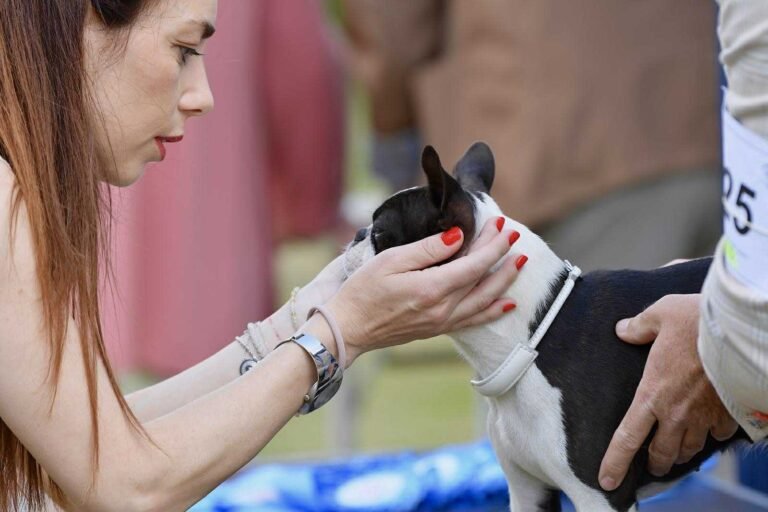
In the ring, this distinction isn’t academic, because how I respond to a dog showing teeth depends entirely on which version I’m looking at. A dog demonstrating genuine, confident aggression toward a judge or another dog is showing a serious temperament fault, and depending on severity, that can mean disqualification, full stop, because it reflects a stability problem the standard explicitly doesn’t tolerate. A dog that snaps out of fear during an unfamiliar, slightly overwhelming examination is showing something different, still a real concern worth noting, but a different concern, often tied to insufficient socialization or a bad day rather than a fundamentally unstable temperament.
Getting this wrong in either direction causes real harm. Labeling a frightened dog as aggressive can end a career, or worse, end up shaping how that dog is treated and trained going forward, often through exactly the kind of confrontational correction that makes fear-based reactivity worse rather than better. Labeling a genuinely confident, aggressive dog as merely fearful misses a real stability problem that needs honest acknowledgment, not excuses.
The correction trap
This is where I think a lot of well-meaning training advice goes wrong, and I’ve written about this before in a different context: approaches built around correcting the visible behavior, the growl, the snap, the lunge, without addressing what’s actually driving it tend to backfire hardest exactly with fear-based cases. Punish a dog for growling and you haven’t removed the fear. You’ve removed the dog’s willingness to warn you before it bites, which is a considerably more dangerous outcome dressed up as obedience.
Fear-driven behavior responds to something closer to the opposite approach: reducing the perceived threat, building distance, and slowly, patiently changing the dog’s underlying emotional response to the trigger rather than suppressing the outward sign of it. Confidently aggressive behavior, by contrast, genuinely does need firm, consistent management and often professional guidance, because it isn’t rooted in the same kind of fear that patient counter-conditioning alone reliably resolves.
How to tell which one you’re actually looking at
Check the body weight, not just the mouth. Forward-leaning, squared-up posture tends to accompany confident aggression. Weight shifted backward, even while the head and teeth are forward, is a strong sign of fear driving the display rather than confidence.
Look for the earlier rungs on the ladder. Was there yawning, lip licking, turning away, or stiffening in the minutes before the snap? Fear-based reactivity almost always shows quieter warning signs first, even if they were easy to miss in the moment.
Notice what happens with distance. A fearful dog typically calms fairly quickly once the trigger retreats or space opens up. A confidently aggressive dog is far more likely to keep escalating or holding its ground even as space increases, because it isn’t trying to create distance from something frightening, it’s asserting control over something it doesn’t want nearby.
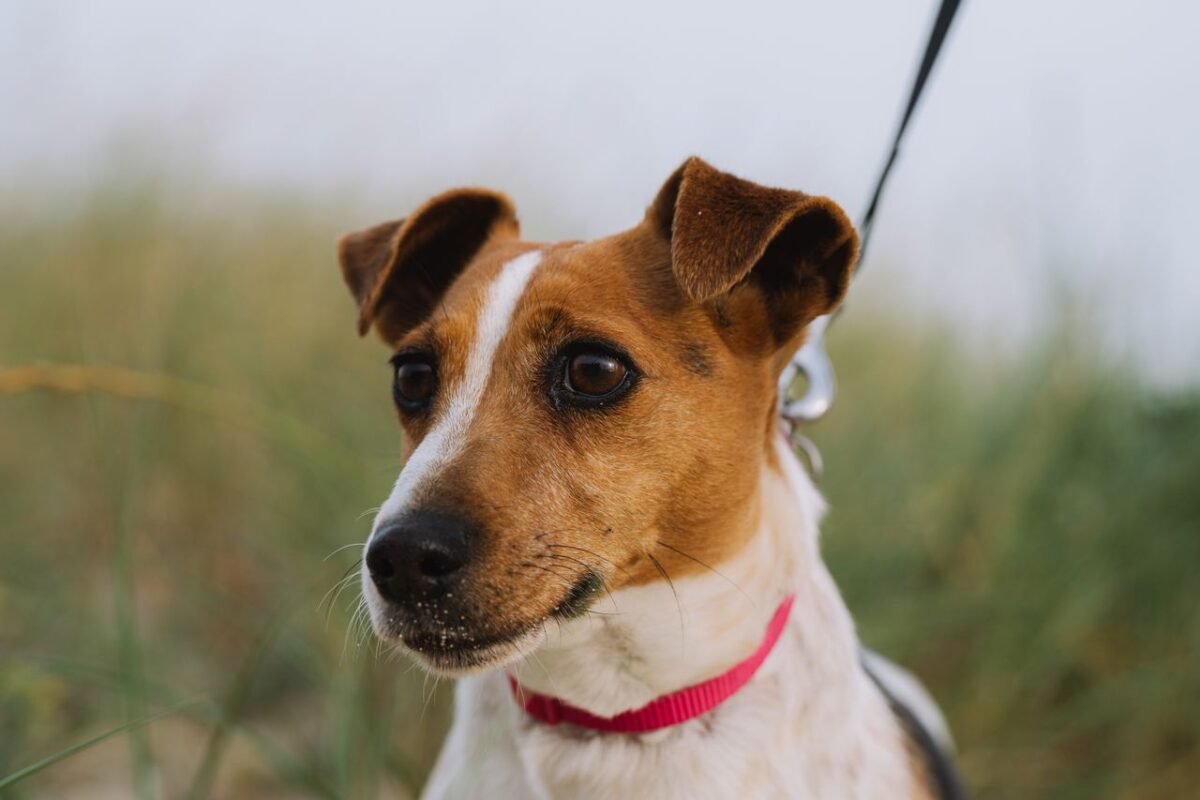
Watch the eyes and ears together, not separately. Pinned-back ears paired with whale eye, the whites showing at the corner, point strongly toward fear. Ears held more naturally with a hard, direct stare point more toward confidence, whatever the mouth is doing.
When genuinely unsure, treat it as fear until proven otherwise. The cost of misreading a frightened dog as merely disobedient and correcting harder is real and often makes things worse. The cost of treating a confident, aggressive dog with a bit more patience and distance while you get a clearer read is comparatively small.
What this changed for me
Learning to read this distinction properly didn’t make me a softer judge. If anything it made me a more accurate one, because I stopped conflating two genuinely different problems that happen to look alike for a fraction of a second. The same is true for any owner trying to understand their own dog’s worst moments. The question worth asking isn’t just what did my dog do. It’s what was actually driving it, and those two questions don’t always have the same answer.
Frequently Asked Questions
How can I tell if my dog is scared or actually aggressive?
Look past the teeth and bark to the body weight and the signals that came before it. Fear tends to show backward-shifted weight, pinned ears, and earlier subtle warnings like lip licking or turning away. Confident aggression tends to show forward weight, a direct stare, and little hesitation.
Is it true that punishing growling makes dogs more dangerous?
For fear-based cases, yes, this is a well-documented concern among behaviorists. Growling is a warning, and suppressing the warning without addressing the underlying fear often just removes the dog’s willingness to signal before escalating further.
What is the Ladder of Aggression?
It’s a framework developed by veterinary behaviorist Kendal Shepherd that maps the typical escalating sequence of canine stress signals, from subtle early cues through to a bite, showing that aggressive-looking behavior is usually the end of a longer sequence rather than a sudden, unprovoked event.
Sources & further reading: the Ladder of Aggression framework – Kendal Shepherd; canine stress and cognition – Stanley Coren.