Fireworks anxiety in dogs: How to prepare a sensitive city dog before New Year’s Eve
If you live in a German city, you already know what the last days of December sound like, and if you share your home with a sensitive dog, you probably also know how long the evening of the thirty-first feels. Fireworks anxiety in dogs is one of the most common fears owners ever have to manage, it is entirely predictable, and it is also one of the few problems where preparing weeks in advance makes a real difference. It is now the middle of November, which means you have roughly six weeks, and that is enough time to do this properly.
How common is fireworks anxiety in dogs?
Fireworks anxiety in dogs is very common: in a study by Emily Blackwell and colleagues at the University of Bristol, around half of the dogs surveyed showed fearful reactions to loud noises, and fireworks were among the noises named most often. This is not a rare problem belonging to a few unlucky owners, and it is not a failure of training or character. A dog’s hearing is far more sensitive than ours, the bangs are unpredictable and come without warning, and in a city they echo between buildings so that the dog cannot tell where they are coming from or when they will stop.
Why do city dogs, and working breeds, suffer so much?
City dogs suffer more because there is nowhere quiet to retreat to, and sensitive working breeds suffer more because they were selected to notice things. A herding dog reacts to sudden movement and sound, a scent hound is highly attuned to its surroundings, and a guardian breed is bred to treat unfamiliar noises as something to report. In the countryside a bang may come from far away, but in a flat the sound arrives through the windows, the walls and the floor, from several directions at once.
Some hunting dogs are deliberately introduced to gunshots, slowly and in controlled circumstances, as part of their training, but this is nothing like a sudden firework in the street at night, and a dog who handles one calmly can still be frightened by the other.
When should I start preparing my dog for New Year’s Eve?
You should start now, because fireworks desensitization works only if the dog stays relaxed at every step, and that takes weeks. In practice the bangs also begin days before the thirty-first, so the real test starts earlier than most people expect.
What actually works? A six-week plan
Weeks 1 to 3: teach the dog that the sound predicts something good. Use a recording of fireworks, played at a volume so low that your dog barely notices it, while you feed him something delicious or play a game. If he shows any sign of worry, the volume is too high. Over several sessions you raise it very slowly. The idea, which comes from counter-conditioning, is that the sound becomes a signal for good things instead of danger. This only works for a dog who is not already afraid of the recording, so please go at his speed, and speak to a veterinary behaviorist if your dog panics at even a faint sound.
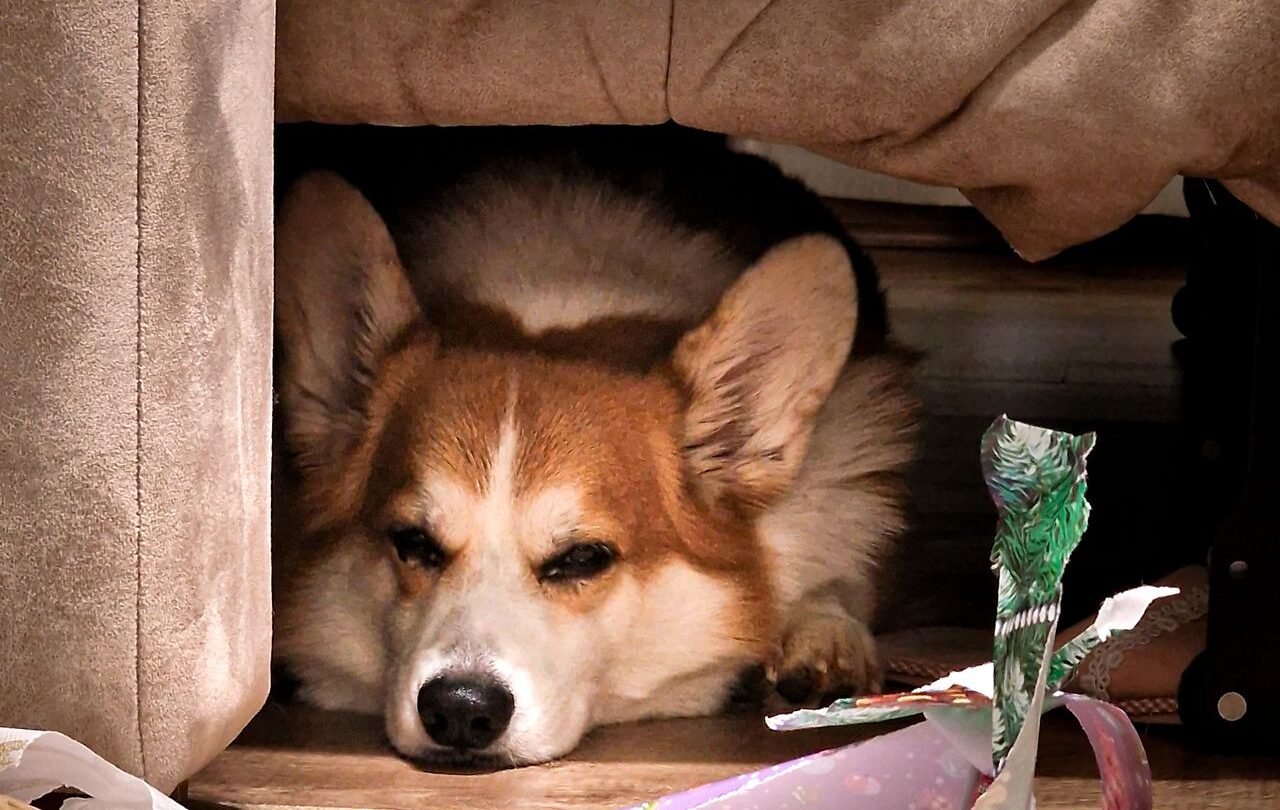
Weeks 1 to 6: build a safe place. Choose one spot in the quietest room of the flat, away from windows, such as a covered crate, a bed in a corridor or a corner behind a sofa, and make it the best place in the house with chews, a blanket that smells of you, and calm. Let him use it long before December, so that he already considers it his own when the noise starts. Never force him in.
Weeks 3 to 6: practice masking the noise. Play white noise, music or the television at a steady volume, so that the dog gets used to a low background sound that can cover the first bangs.
Check the practical things now. Make sure his microchip is registered with your current phone number and address, that his collar has a tag, and that he cannot slip out of the collar or lead. More dogs run away on New Year’s Eve than on any other night of the year, and a frightened dog can cover a surprising distance in minutes.
What should I do on New Year’s Eve itself?
On the day, keep everything calm and predictable, and plan around the noise rather than hoping he will manage.
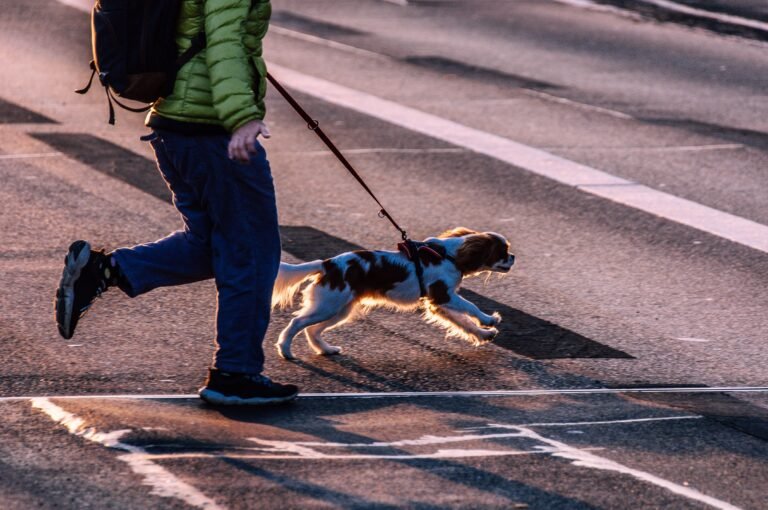
Walk early. Take the last long walk in daylight, with extra care on the lead, and do the late toilet breaks on a short lead at the door, because a bang on the street can send a dog bolting.
Feed early and exercise him well. A tired, fed dog copes better than a restless one, and a sniffing walk or a scent game in the afternoon is calming.
Close curtains and windows. Shut out the flashes and muffle the noise, and turn on the white noise or music before the first bang.
Stay with him if you can. Your calm presence helps, and you do not need to avoid comforting him. Fear is not something you can reinforce by being kind, but your own tension travels down the lead, so try to stay relaxed.
Let him choose. If he wants to hide, let him. If he wants to be near you, let him. Do not drag him out of his safe place and do not punish him for panting, trembling, barking or toileting indoors.
Do not give human medication. For dogs with severe reactions, a veterinary behaviorist can prescribe suitable medication or supplements, and this should be arranged weeks ahead, since some need time to work. Please do not use anything without a vet’s advice.
When should I speak to a professional?
You should speak to a veterinary behaviorist or your vet as soon as possible if your dog trembles, drools, tries to escape, loses control of his bladder or refuses food at the faintest sound, because this is a real phobia and often gets worse with each year unless it is treated. Early help makes a very large difference, and November is much better than the thirtieth of December.
A quick note on the days afterwards
Fireworks do not end at midnight, and the following days can be tense too. Keep walks short and calm, avoid places where bangs are likely, and let your dog rest. Most dogs return to normal within a few days, and a dog who stays anxious for weeks needs a conversation with a professional.
If you want to understand the quieter signs of stress that dogs show long before they panic, I put together a free guide, “5 Signs Your City Dog Is Overwhelmed,” which you can grab here.
Frequently Asked Questions
Why is my dog so afraid of fireworks?
Dogs hear much better than we do, the bangs are sudden and unpredictable, and in a city they echo from all directions. A dog cannot understand that the noise is harmless and will end soon, so it reads as a threat.
How do I calm a dog during fireworks?
Give him a safe, quiet place away from windows, cover the noise with music or white noise, stay calm yourself and let him choose where to be. Do not punish him, and talk to your vet about medication if his fear is severe.
Can fireworks fear be cured?
It can often be reduced a lot with slow desensitization and counter-conditioning started well in advance, but severe phobias need the help of a veterinary behaviorist.
Should I take my dog out during fireworks?
Avoid it if you can. Take the last long walk before dark, keep him on a short lead for toilet breaks, and make sure his microchip details are up to date in case he bolts.
Sources & further reading: fear responses to noises in dogs, Emily Blackwell, John Bradshaw and Rachel Casey, “Fear responses to noises in domestic dogs: Prevalence, risk factors and co-occurrence with other fear related behaviour”, Applied Animal Behaviour Science, 2013.