Montenegrin Mountain Hound in the city: What I learned preparing Rina for the ring
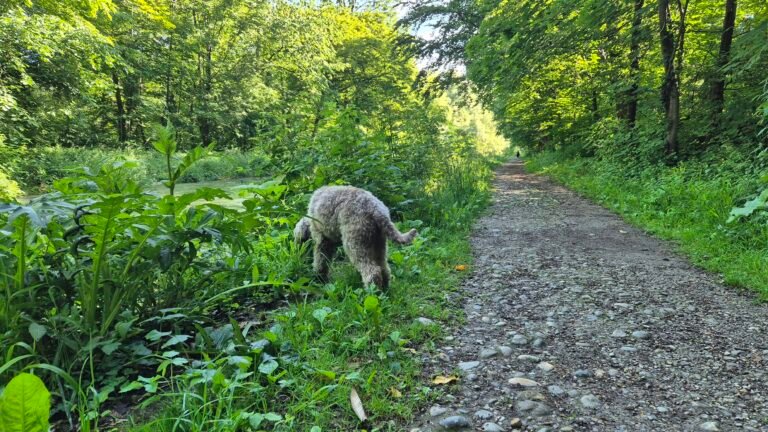
The first time I took Rina into the city for show preparation, she stopped dead in the middle of the pavement, nose in the air, and simply left the conversation. I was still holding the leash. Mentally, she was three streets over, following whatever trail had just crossed her path.
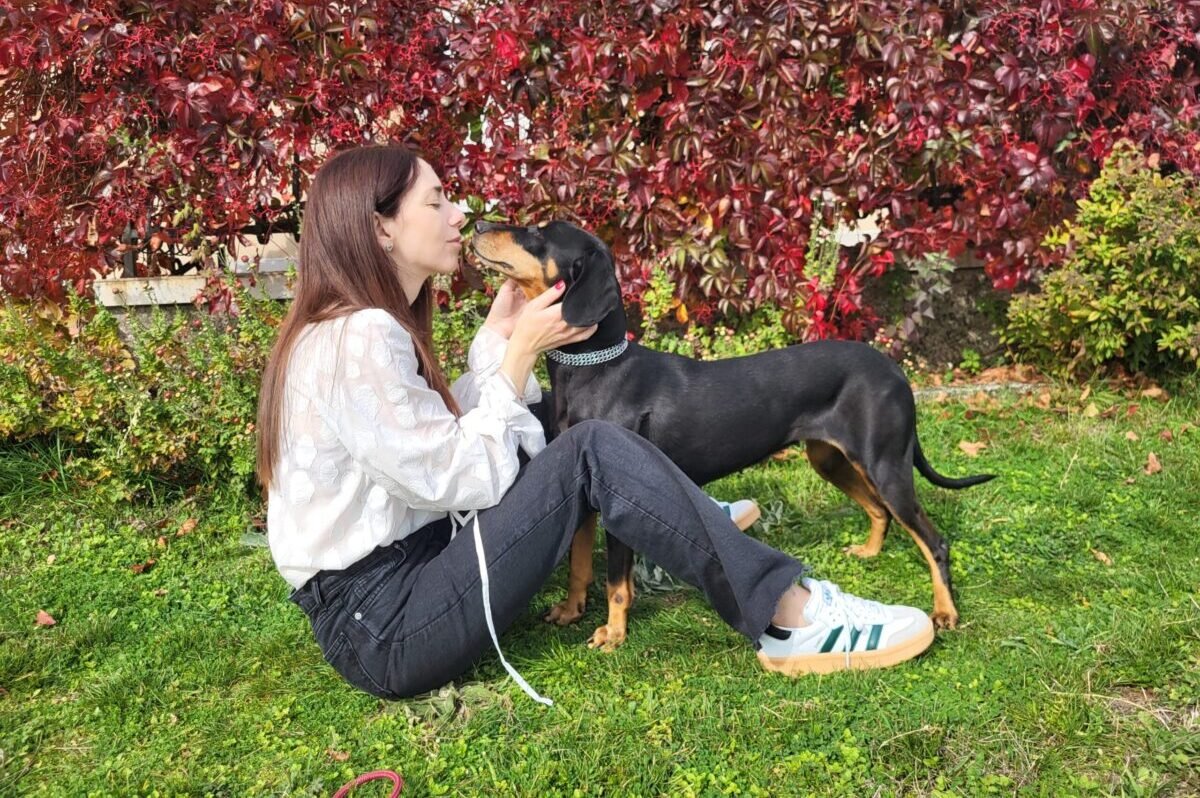
Rina is a Montenegrin Mountain Hound – our national breed, a scent hound bred for generations to track fox and hare across the mountains of Montenegro, working for hours at a stretch on nothing but her nose and her own judgment. At home, she is exactly what the standard describes: calm, gentle, deeply attached to her people. Put that same dog on a city street, layered with a hundred competing scent trails in the space of a single block, and you’re not looking at a distracted or badly trained dog. You’re looking at an extraordinary nose doing exactly what it was built to do, in an environment that never stops giving it something to do it with.
The nose doesn’t know it’s off duty
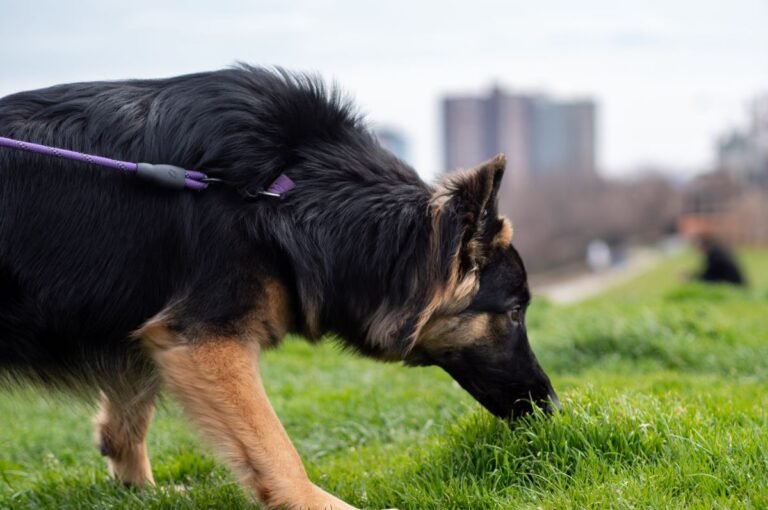
This is the part I think gets lost when people picture a “hunting dog struggling in the city” – they imagine a dog bored and understimulated. A scent hound in a city isn’t understimulated. If anything, it’s the opposite. Every doorway, lamppost, and stretch of pavement carries the layered scent history of everyone and everything that’s passed through, and a nose built for tracking doesn’t get to choose which of those trails matter. It processes all of it, all the time.
Alexandra Horowitz, whose research into canine olfaction and umwelt – essentially, the sensory world an animal actually experiences – has done more than almost anyone to make this concrete for ordinary owners, describes scent for dogs as something closer to a layered, moving picture than a simple smell. For a hound bred specifically to follow one thread through all that noise, a city sidewalk is less “distracting” and more genuinely overwhelming in scope. It’s not that Rina forgets I exist. It’s that, for a few seconds, the trail is simply more informative than I am.
The ring taught me what “independent” actually means
Getting Rina show-ready meant asking her to hold a stack, tolerate a judge’s hands, and stay mentally present for several minutes at a time – directly at odds with a temperament built to lock onto a scent trail and follow it wherever it leads, on the dog’s own judgment, without checking in.
The gaiting was where this showed up hardest, and honestly, where I underestimated the challenge going in. A ring is full of exactly the kind of ambient scent noise that pulls a hound’s attention sideways – other dogs, their handlers, whatever’s been walked across that patch of grass earlier in the day. Asking Rina to move in a straight, controlled line at a steady pace, right past all of that, was asking her to override the single strongest instinct she has, at the exact moment I most needed her focused on me instead of the ground
That’s not a training failure waiting to happen. It’s the literal job description. Hound breeders and standards have long acknowledged this independence explicitly – a scent hound working a trail has to make constant judgment calls without instruction, because there’s no handler out on the mountain telling her which way the fox turned. Stanley Coren’s research on breed differences in trainability places hounds consistently among the more independent-thinking types, not because they’re less capable, but because their intelligence evolved toward solving a different problem than “watch the handler for instructions.”
What actually got Rina ring-ready wasn’t correction. It was building enough value in me, specifically, that checking in became worth her while even next to an interesting trail – hundreds of short, low-pressure sessions building duration slowly, always rewarding the choice to disengage from a scent and re-engage with me, never punishing the nose for doing its job. By show day, she held her gait cleanly past dogs and distractions I genuinely hadn’t been sure she’d manage, and the whole thing went well – which, if I’m honest, felt like a bigger win to me than anything on the scorecard.
What this means if you’re just living with a hound, not showing one
None of this requires a show ring to matter. If you share your life with a scent hound in a city – Montenegrin Mountain Hound, Beagle, Basset, any of the dozens of breeds built around that nose – the same principles carry over directly.
Give the nose a legitimate outlet before it invents one. Scatter-feeding, a scent trail laid with treats through the apartment, or structured nose-work games give a hound the exact kind of task the breed was built for, and genuinely tire them out faster than a walk that only exercises the legs.
Build “checking in” into a habit, not an emergency measure. Reward voluntary eye contact and re-engagement constantly, especially away from distraction, so it’s a strong, well-paid habit by the time a genuinely exciting trail shows up.
Accept that recall around a hot scent trail is a different skill than ordinary recall. Practicing recall in a quiet garden doesn’t automatically transfer to recall mid-trail. If off-leash freedom matters to you, that specific scenario needs its own deliberate practice, ideally in a secure area.
Let sniffing be the point of some walks, not an interruption to them. A walk where the destination doesn’t matter and the dog sets the pace, nose down, is genuinely restorative for a scent hound in a way a brisk, structured walk never will be.
Manage the highest-distraction routes with real caution. Areas with heavy foot traffic, food smells, or wildlife trails are going to test focus hardest – not a reason to avoid them forever, but worth approaching with realistic expectations while training is still developing.
The thing I’d tell past me
Standing on that pavement, watching Rina disappear into her own nose for a few seconds, I don’t think I needed to fix anything that day. I needed to understand that I was asking several hundred years of scent-hound instinct to compete with me for attention in an environment absolutely saturated with information – and that winning that competition, even sometimes, was going to take real, patient work, not a sharper correction.
Frequently Asked Questions
Why does my scent hound ignore me the second they catch a scent?
It’s not defiance – scent hounds were bred to work a trail independently, without checking back for instructions. The nose taking priority over your voice is the breed doing exactly what centuries of selection built it to do; changing that takes patient, rewarded re-engagement training, not louder commands.
Are scent hounds hard to recall off-leash?
Generally yes, more so than many other working types, precisely because of that independent trailing instinct. Reliable recall around a genuinely exciting scent needs to be trained as its own specific scenario, not assumed to transfer automatically from quiet-environment recall.
Can city life ever really satisfy a scent hound?
Not in the way open countryside can, but structured scent work, sniff-focused walks, and nose games can genuinely meet a large part of that need indoors and on-leash – it just requires being deliberate about it rather than expecting a normal walk to cover it.
Sources & further reading: canine olfaction and scent-driven behavior – Alexandra Horowitz; breed differences in trainability and independent cognition – Stanley Coren.