Lagotto Romagnolo in small spaces: A water dog adjusting to apartment life
People are usually surprised to learn the curly little dog trotting around their neighborhood was, a few centuries ago, jumping into freezing marshland to retrieve waterfowl. The Lagotto Romagnolo started life as a working water retriever in the wetlands of Romagna, in northern Italy – and when those marshes were drained for farmland, the breed didn’t disappear, it got reassigned. That extraordinary nose, the same one built to mark downed birds in reeds, turned out to be exactly what was needed to hunt for something else buried out of sight: truffles. Today, Lagotti are still the standard truffle-hunting breed across Italy, working noses for a living.
None of that history is obviously visible in a dog curled up on your sofa in a two-room apartment. But it’s still in there, and it shapes almost everything about how this breed actually lives day to day – including the parts that catch new owners off guard.
A nose that never clocked out
A dog bred specifically to find something hidden underground, using scent alone, doesn’t switch that instinct off just because there’s no truffle to find. In an apartment, that instinct has to go somewhere, and if you don’t give it somewhere legitimate, it tends to show up as obsessive interest in the trash, relentless counter-surfing, or general restlessness that looks a lot like “too much energy” but is really “not enough job.”
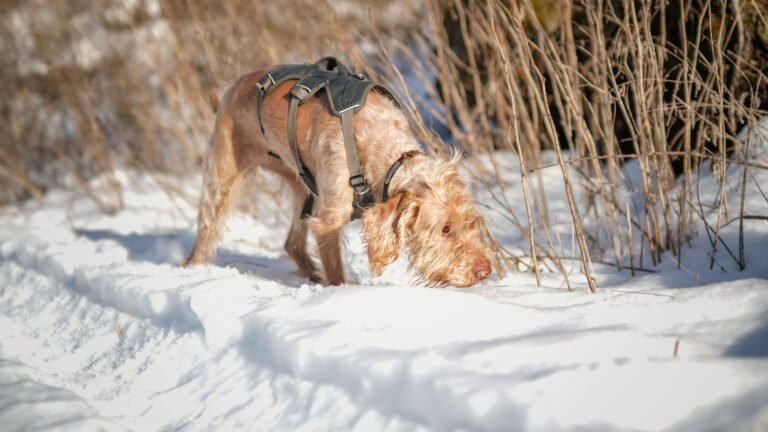
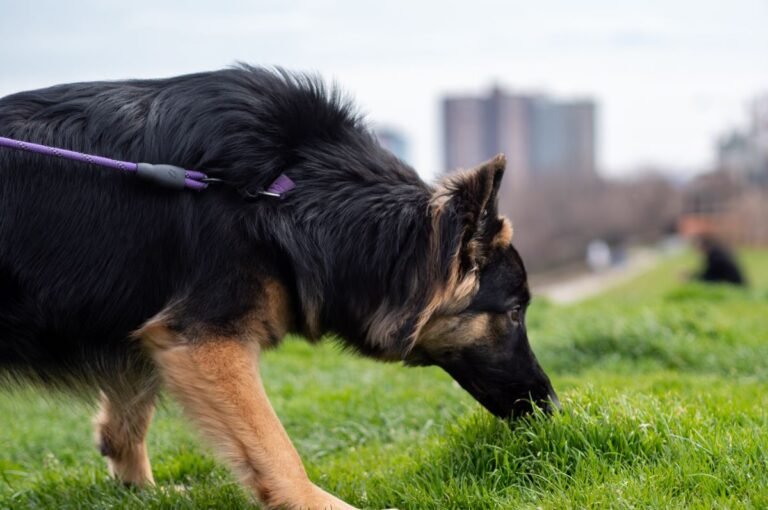
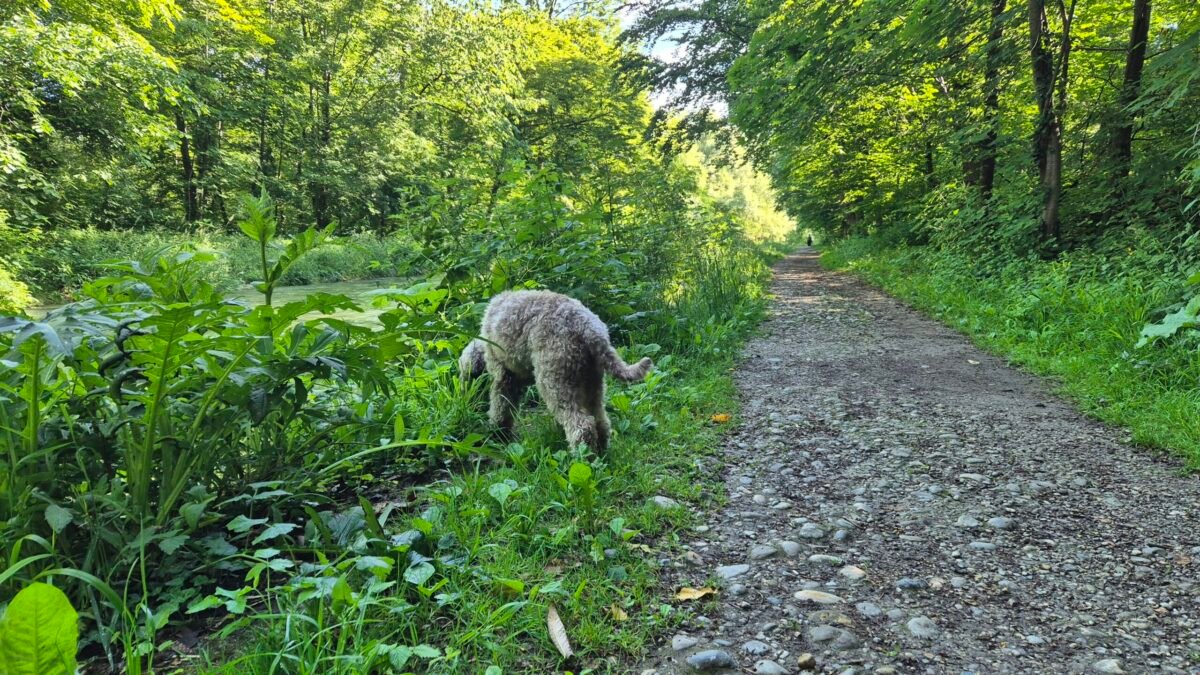
Here’s the thing that took me a while to fully appreciate with my own Lagotto: when he actually gets to work his nose outside, something shifts completely. Genuinely sniff-led time – not a brisk walk, but real, unhurried scent work outdoors – and he essentially clocks out of everything else. Other dogs passing by barely register. The usual walk distractions just don’t compete with whatever’s coming through his nose. And the knock-on effect is what surprised me most: give him that outlet outside, and he comes home the sweetest, calmest dog imaginable, easy and biddable in a way that has nothing to do with obedience training and everything to do with a need that’s actually been met. Let him lead with his nose outdoors, and you get an obedient, settled dog everywhere else. It’s less “training” and more getting out of the way of what he’s built to do.
I keep coming back to this same point across breeds, because it’s genuinely the single most underused tool in apartment living: a hidden-treat search game, five or ten minutes, indoors, costs you almost nothing and satisfies a drive that a walk around the block simply doesn’t touch. For a Lagotto specifically, this isn’t optional enrichment – it’s close to the core of who the dog is.
The Velcro factor
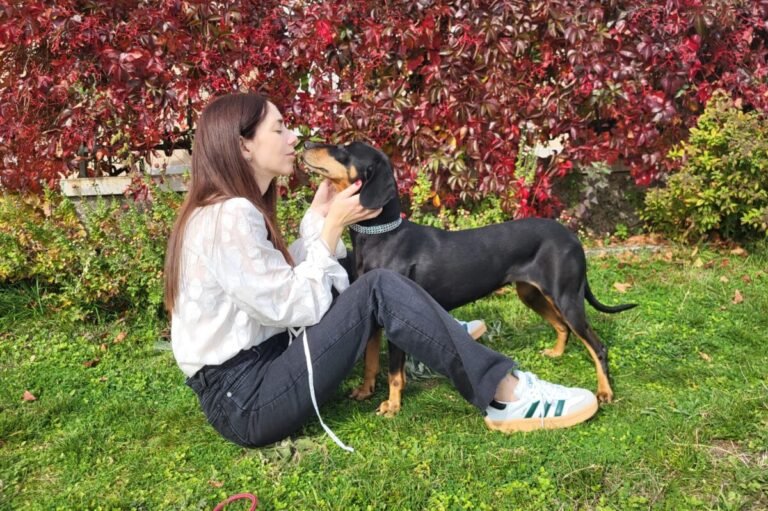
Lagotti are also famously, almost comically attached to their people. This isn’t incidental – a dog working closely alongside a handler in the field, reading subtle cues about where to search next, was selected generation after generation for exactly that kind of tight behavioral partnership. Researchers József Topál and Ádám Miklósi, whose work adapting human attachment-study methods to dogs has become foundational in canine behavioral science, found that dogs show attachment patterns to their owners strikingly similar to those infants show toward caregivers – using the owner as a “secure base” to explore from and returning for reassurance under stress. In a breed selected as intensely for partnership as the Lagotto, that attachment tendency runs particularly strong.
In a small apartment, that closeness can tip into real separation difficulty if it isn’t deliberately managed from early on. The dog isn’t being needy for the sake of it – it’s doing what it was bred to do, minus the job that used to structure the relationship.
How long can a Lagotto be left alone?
It is one of the first questions new Lagotto owners ask, and it is also one that people in other countries search for in their own language, for instance “Lagotto in casa da solo” in Italy, which tells me how many owners are quietly worrying about the same thing. The honest answer is that there is no single number that suits every dog, because it depends on the dog’s age, his history, how well he has been taught to be alone, and how much exercise and mental work he has had beforehand, but there are some useful guidelines.
For an adult Lagotto who has been prepared properly, most behaviorists would consider a few hours, roughly four to six, a reasonable upper limit on a regular day, and it should be the exception rather than a routine of eight or nine hours with no break. Puppies and young dogs need much less, and a dog who has never practised being alone should be given far less at the start, because the first experiences of separation shape how he feels about it for a long time afterwards.
With a breed as closely bonded to its person as the Lagotto, how you build up to those hours matters much more than the hours themselves. I started with five or ten minutes and a chew toy, and I was genuinely calm and confident each time I walked out, not performing calm but feeling it, because I knew I was coming back. Lagotti read emotion with startling precision, so if you are anxious about leaving, especially in those early lessons, the dog will pick it up faster than any cue you are trying to teach him. Once those short separations were ordinary, we moved to longer ones, a little at a time, and I never extended the time while he was still showing signs of worry.
A simple way to build it up is to start with a few minutes behind a closed door while you are still at home, then step outside for a short time, then increase gradually to ten minutes, twenty, an hour, always returning before the dog begins to struggle. If he whines, paces or refuses his chew, you went too far too fast, and the kindest thing is to go back a step rather than push on.
Before you leave, give him a proper outing with real sniffing time, because a dog who has had his nose properly used is far more likely to settle. Leave something to occupy him, a stuffed food toy or a chew, and keep your departure and return low-key, so that neither feels like an event. These small habits matter more with a Lagotto than with most breeds, because that keen, scent-driven mind needs somewhere to go while you are away.
Watch for the early signs that he is finding it difficult: pacing by the door, vocalizing as you get ready to leave, drooling or panting, or shadowing you obsessively around the flat. If your dog cannot settle at all, barks or howls for long periods, or damages things when you are out, it is worth speaking to a veterinary behaviorist rather than hoping he will grow out of it, since separation difficulty in a bonded breed rarely resolves on its own.
What actually helps
Build independence in small doses, early – and mind your own energy while you do it. Practice short periods of separation – a closed door for a few minutes while you’re still home, gradually extended – well before you ever need to leave for a full day. But the part that matters just as much: Lagotti read emotion with startling precision, so if you’re anxious about leaving, especially during those early learning stages, they’ll pick up on it faster than any cue you’re actually trying to teach. I started with five or ten minutes and a chew toy, genuinely calm and confident each time I walked out – not performing calm, actually feeling it, because I knew I was coming back – and we got to longer stretches remarkably quickly. Your own confidence is doing at least half the training.
Feed the nose, not just the legs – outdoors first, indoors as backup. Real, unhurried sniffing time outside is the priority; it’s what actually satisfies this breed at the root, not just physical exercise. On bad-weather days when a proper outdoor scent session isn’t possible, I keep a small truffle in the freezer specifically for this – I’ll hide it somewhere around the flat, or use his favorite treats the same way, and let him hunt it down. It’s a genuine substitute for the real job on the days the weather won’t cooperate, not just a distraction. Stanley Coren’s research on breed differences in trainability consistently ranks scent-and-partnership breeds like the Lagotto among the more biddable, food-motivated types – which, practically speaking, means this kind of enrichment tends to land extremely well and isn’t hard to teach.
Don’t skip physical exercise just because the dog is small. Despite a compact frame, Lagotti carry real working stamina underneath the curls. A short walk alone won’t cut it; this breed does better with a mix of mental work and a genuine chance to move, even if that’s a longer, more varied route rather than sheer distance.
If you can get near water, use it – they won’t wait for summer. You don’t need a lake on your doorstep for this to matter, but mine will jump into water at every single opportunity, regardless of season or temperature. That’s not a quirk, it’s the original job description resurfacing, and even the rare supervised swim or wade taps into something genuinely instinctive in a way nothing else fully replicates.
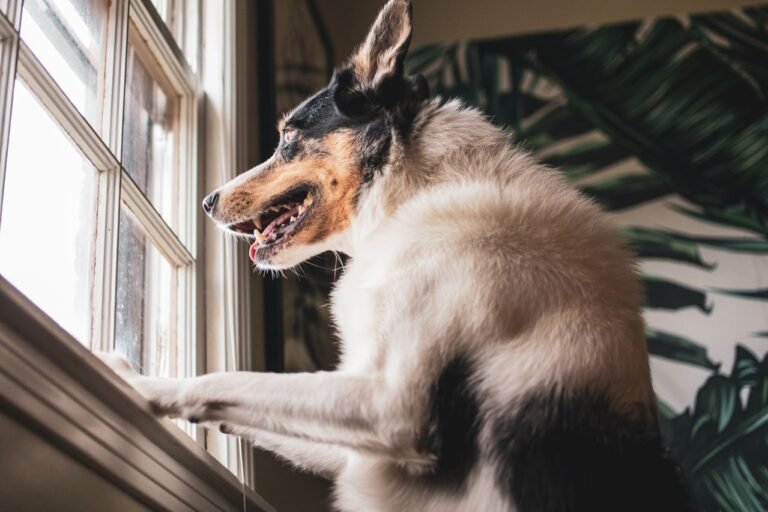
Watch for early separation-related stress signals, not just the destroyed cushion afterward. Pacing by the door, excessive vocalizing as you prepare to leave, or shadowing you obsessively around the apartment are all earlier, quieter signs than the aftermath most owners actually notice first.
The honest trade-off
I won’t pretend a Lagotto is a low-maintenance apartment breed just because they’re not particularly large. What you’re managing is a dog built for a working partnership, minus the daily work – and the affection and closeness that makes them wonderful companions is the exact same trait that makes them prone to struggle if that partnership isn’t actively maintained. It’s not a flaw in the breed. It’s the breed, and it responds beautifully once you understand what it actually needs from you.
Frequently Asked Questions
How long can I leave my Lagotto alone?
An adult Lagotto who has been taught to be alone can usually manage a few hours, roughly four to six at most on an ordinary day, but only if he has been prepared gradually. Puppies and dogs who have not practised should be left for much shorter periods.
Is a Lagotto Romagnolo a good apartment dog?
Generally yes, with real caveats – they adapt well to small spaces physically, but their attachment tendency and scent-driven mind need deliberate daily engagement, not just adequate square footage.
Why is my Lagotto so anxious when I leave?
It’s likely rooted in the breed’s strong selection for close human partnership rather than a training failure. Gradual, structured alone-time practice, started early and built slowly, tends to help far more than either punishment or over-comforting before departures.
Do Lagotti actually need truffle hunting to be happy?
Not literally – but they do need some form of structured nose work. Simple at-home scent games can meaningfully satisfy the same underlying drive, even without an actual truffle in sight.
Sources & further reading: canine attachment behavior – József Topál and Ádám Miklósi; breed differences in trainability – Stanley Coren.