What judges actually look for in temperament (not just structure)
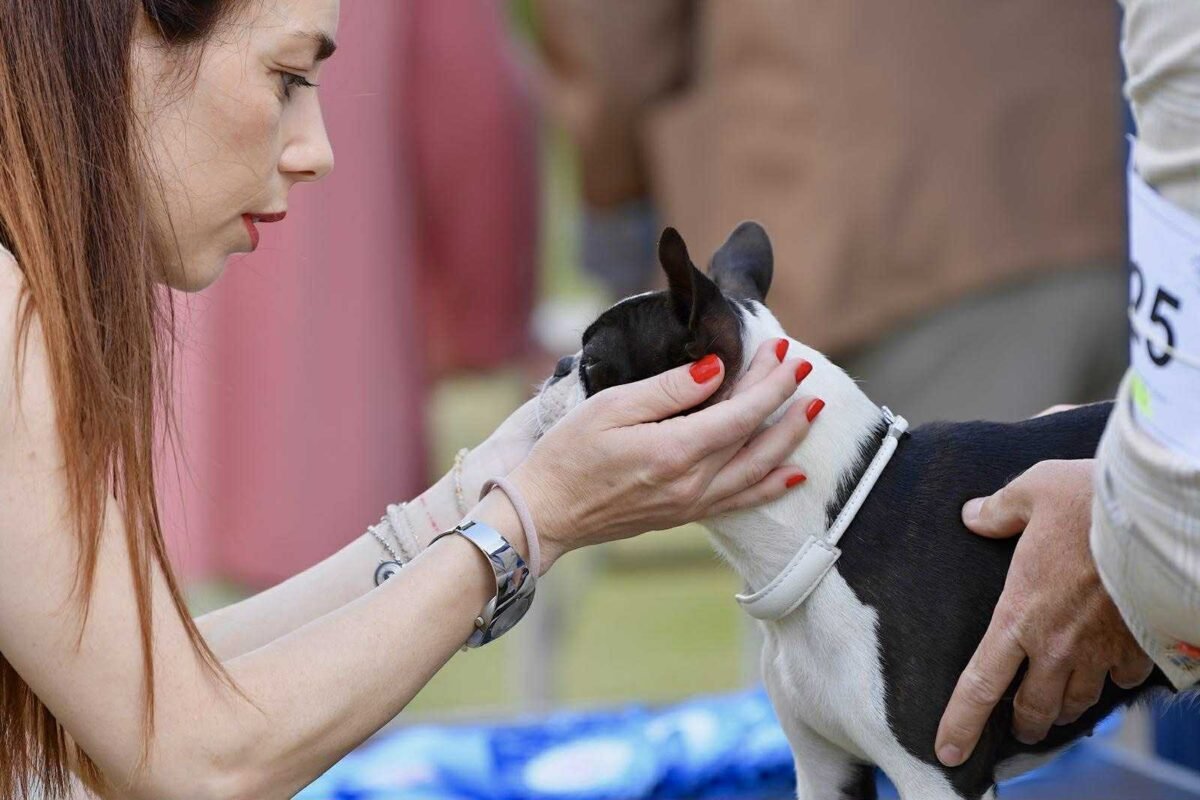
People tend to assume a dog show is essentially a beauty pageant, all coat and proportions and a bit of showy movement around the ring, and I understand exactly why that’s the impression from the seats, because that’s really all there is to see from a distance. What’s much harder to notice from ringside is that in the handful of seconds I spend with my hands on a dog, coat and structure aren’t actually where most of my attention goes. I’m reading something quieter than that: whether this animal’s nervous system is holding steady under a small, deliberate amount of pressure, in front of a stranger who’s touching it in ways it’s never quite used to. That’s temperament, and in most breed standards it isn’t a footnote tacked onto the physical description. Get it wrong, and it can disqualify a dog that’s otherwise flawless.
Structure is the easy part
Here’s something that tends to surprise people outside the world of showing: evaluating movement and proportion, difficult as it sounds, is genuinely the more mechanical half of the job. Angles can be measured. A gait either flows cleanly or it doesn’t, and either way the dog isn’t really the variable in that equation, the standard is doing most of the work for you.
Temperament refuses to sit still like that. It’s a live read, happening in real time, on a dog who has never met me, inside an environment built to be at least a little overwhelming on purpose – strangers, other dogs, noise, unfamiliar hands moving over its body. Most breed standards build this expectation in explicitly, often in language close to “must not show fear or aggression,” and for a great many standards a genuine temperament fault isn’t simply a deduction. It’s disqualifying outright, regardless of how correct everything else about the dog happens to be. A dog can be the most beautifully built specimen in the ring and still not place, because temperament was never meant to be a side note here. It’s the point.
The respected American judge and writer Richard Beauchamp, whose decades of judging and writing shaped how a whole generation of exhibitors think about type, had a phrase for this that I still come back to: breed character. His argument was that a dog’s mental bearing and its physical structure were never really two separate categories being scored side by side in the first place, but one unified picture of what the breed actually is. A structurally correct dog can still fail to look or carry itself the way its breed should, because carriage and attitude and the particular way an animal meets the world are just as much “type” as its silhouette. That reframing changed something in how I judge. Temperament stopped being a box ticked after the structure was assessed, and became part of the very same read.
What I’m actually reading
When I approach a dog, what I’m really watching for is the gap between tolerating something and being genuinely comfortable with it, and it’s a subtler distinction than it sounds. A dog that’s truly stable tends to meet the approach with loose, easy body language: weight settled evenly, no flinch at first contact, an expression that stays soft rather than fixed in place. A dog that’s shut down rather than stable can look, to an untrained eye, almost identical – still, quiet, giving nothing away. The difference lives in details most people are never taught to look for: a breath held a beat too long, a tail carried a shade too tightly, eyes that track a movement without the head ever turning to follow it. One of those dogs is genuinely fine. The other has learned that reacting doesn’t help and has simply stopped trying, and mistaking the second for the first is one of the more common errors even experienced owners make, because a suppressed dog isn’t further from its threshold than it looks. It’s closer.
But here’s where that gets complicated in exactly the way it should: stillness and reserve aren’t automatically warning signs, because plenty of breeds are correct precisely when they’re reserved. Nobody judging a Caucasian Shepherd is looking for a dog wagging its tail at a stranger the way a Golden Retriever would – a Caucasian Shepherd greeting a judge with warm enthusiasm would be, frankly, wrong for the breed, almost unsettling to see, because centuries of selection built a livestock guardian meant to be watchful and mildly suspicious of anyone unfamiliar. The various Belgian Shepherd varieties carry a similar expectation; a certain aloofness with strangers is written into what correct temperament looks like for these dogs, not a flaw to train out of them. So the real skill isn’t sorting dogs into friendly versus standoffish. It’s knowing what correct looks like for the specific breed in front of you, and then reading whether the dog in the ring is confidently, calmly reserved, or quietly afraid — because those two states can look almost the same from a distance and mean something entirely different underneath.
This distinction isn’t something I invented ringside. It’s grounded in real behavioral science. James Serpell’s work developing the C-BARQ assessment, now one of the most widely used tools for evaluating canine behavior, is built on exactly this kind of structured, careful observation rather than surface impressions. Further back, J.P. Scott and John Fuller’s landmark long-term study on the genetics and social behavior of dogs remains, decades on, one of the most influential pieces of research in the field, and it was among the first to rigorously demonstrate that temperament has a genuine genetic and developmental basis, shaped by both inherited traits and the critical early socialization window, rather than something an owner simply causes or fails to cause through training after the fact.
Why this isn’t just a show-ring thing
I think the most useful thing I can hand someone who will never set foot in a ring is this: you can learn to read your own dog roughly the way a judge learns to read a completely unfamiliar one, and once you do, it changes how you interpret almost everything the dog does afterward.
Watch for the difference between calm and shut down. A genuinely relaxed dog has body language that shifts and resettles; it stays changeable. A shut-down dog tends to freeze into one position and hold it. Very still and very quiet is worth a second look, not automatic relief that they’re “being good.”
Know what’s actually correct for your breed before you judge the behavior. A reserved, watchful dog isn’t necessarily anxious, especially in guardian or protection-lineage breeds where that reserve is the point. The question isn’t whether your dog seems outgoing. It’s whether the reserve looks confident and settled, or tense underneath.
Test tolerance gently and systematically. Rather than assuming your dog is fine with handling simply because they don’t pull away, try brief, calm touch in a few places, paws, ears, muzzle, and watch for subtler avoidance, a slight lean away, a lip lick, a stiffening.
Notice what happens after the stressor, not only during it. A stable dog recovers quickly once a stressful moment passes, shaking it off and moving on. A dog that stays tense well afterward is telling you the moment cost more than it looked like at the time.
Don’t mistake obedience for comfort. A dog can be perfectly compliant while still being quietly overwhelmed underneath it. Compliance can be trained. Genuine ease is much harder to fake, and it shows in exactly the small details easy to miss if you’re not looking.
The part that actually matters most
If there’s one thing years of doing this has genuinely changed in how I see dogs, it’s this: temperament was never a fixed score a dog either passes or fails once and for all. It’s a living, moving thing, a nervous system in ongoing conversation with whatever’s around it, and judging it well means paying close enough attention to catch the quiet signals before they ever become loud ones. That skill doesn’t belong only inside a show ring. It’s exactly what every owner is already doing, or could be doing, on every ordinary walk they take.
Frequently Asked Questions
Can a nervous dog still do well in shows?
Generally no. Most breed standards treat genuine fear or instability as a serious fault or disqualification, no matter how physically correct the dog is otherwise. Mild nerves a dog works through calmly read very differently than genuine instability.
Is temperament mostly genetic or mostly environment?
Both, and they interact constantly. Scott and Fuller’s foundational research established a real genetic and developmental basis for temperament, while early socialization, especially during key developmental windows, shapes how it actually expresses itself.
Is a reserved or aloof dog automatically a sign of a problem?
Not at all – one of the more common misreadings owners make. Many breeds, guardian and protection types especially, are correct precisely when reserved with strangers. The real question isn’t friendliness. It’s whether that reserve looks calm and confident, or tense and fearful.
Sources & further reading: canine behavioral assessment (C-BARQ) – James Serpell; genetics and developmental behavior in dogs – J.P. Scott and John L. Fuller; breed character and judging philosophy – Richard G. Beauchamp.